

In recent years, more and more women have become invested in skincare, from cleansing, moisturizing, and whitening to anti-aging, the steps involved are increasing. According to surveys, women use an average of four to seven skincare products daily. However, dermatology clinics observe the opposite phenomenon: an increasing number of people seeking treatment for closed comedones and recurring breakouts.
It may seem contradictory, but the core issue is not "insufficient skincare" but rather "too much, too varied, and too irritating skincare."
Closed comedones are essentially oil and dead skin cells stuck in the pores, unable to exit after being "sealed." If the pore opening is too narrow or the stratum corneum is too thick, closed comedones will continuously form. Many people mistakenly believe they need to intensify cleansing or switch to more serums, resulting in a vicious cycle.
Therefore, before understanding the cause of closed comedones, it's more important to know: when closed comedones appear frequently and repeatedly, the skin's most urgent need is to "open up the pore openings."

Closed comedones are precisely caused by over-moisturizing. (Image source: Freepik)
1. Open up pore openings from the source, and closed comedones will gradually decrease.
The most common occurrences of closed comedones are continuous bumps on the forehead, rough chin, and easily clogged pores around the nose, indicating a thickening stratum corneum or narrowing pore openings. Fruit acids are the fastest way to reopen these openings.

Neostrata AHA Series
NeoStrata Gel Plus AHA15 contains 15% fruit acid (suitable for home use), a high-concentration fruit acid level that can deeply soften keratin and break down oil plugs, pushing out waste clogging the pores. It is highly effective in improving dense closed comedones, recurring blackheads and whiteheads, and rough, dull skin.
Especially suitable for:
- People with dense closed comedones, rough skin texture, and recurring blackheads and whiteheads
- Deep keratin exfoliation: improves thick keratin and clogged pore openings
- Softens oil plugs: makes closed comedones easier to remove
- Improves smoothness and radiance: promotes renewal and collagen production
At-home fruit acid treatment (1–2 times a week):
After cleansing, apply a thin layer to the entire face or T-zone, leave for 15–20 minutes, then rinse and follow with your usual skincare routine. Alternatively, apply thinly to specific areas for exfoliation, such as acne, rough patches, thick keratin, or areas prone to clogging on the body (e.g., back, elbows, knees), without rinsing.
(Mild tingling may occur initially, which is a normal reaction and will subside as the skin adapts.)
2. Skin naturally balances itself: excessive skincare can make it worse.
Human skin is a very complex organ that has self-repair and self-regulation capabilities. Skin cells react to changes in the external environment, secreting appropriate amounts of oil and keratin to maintain the skin's healthy balance.
But when we add too many steps, for example:
- Washing the face more than twice a day
- Using anti-aging, acids, and whitening products all in one night
- Constantly changing different serums
- Continuously exfoliating
- Using heavy creams that suffocate pores

While facial cleansing is important, over-cleansing is not good and may lead to chaotic oil secretion. (Image source: Freepik)
The skin's natural rhythm will be disrupted. One of the most common issues is "over-cleansing." Many people, upon seeing closed comedones, assume their face isn't clean enough, leading to washing their face three times a day or choosing overly oil-stripping cleansers. This makes the skin progressively drier, and drier skin becomes oilier, ultimately resulting in more closed comedones.
The solution is not to stop washing your face, but to use a cleanser that keeps pores clear without damaging the skin barrier.
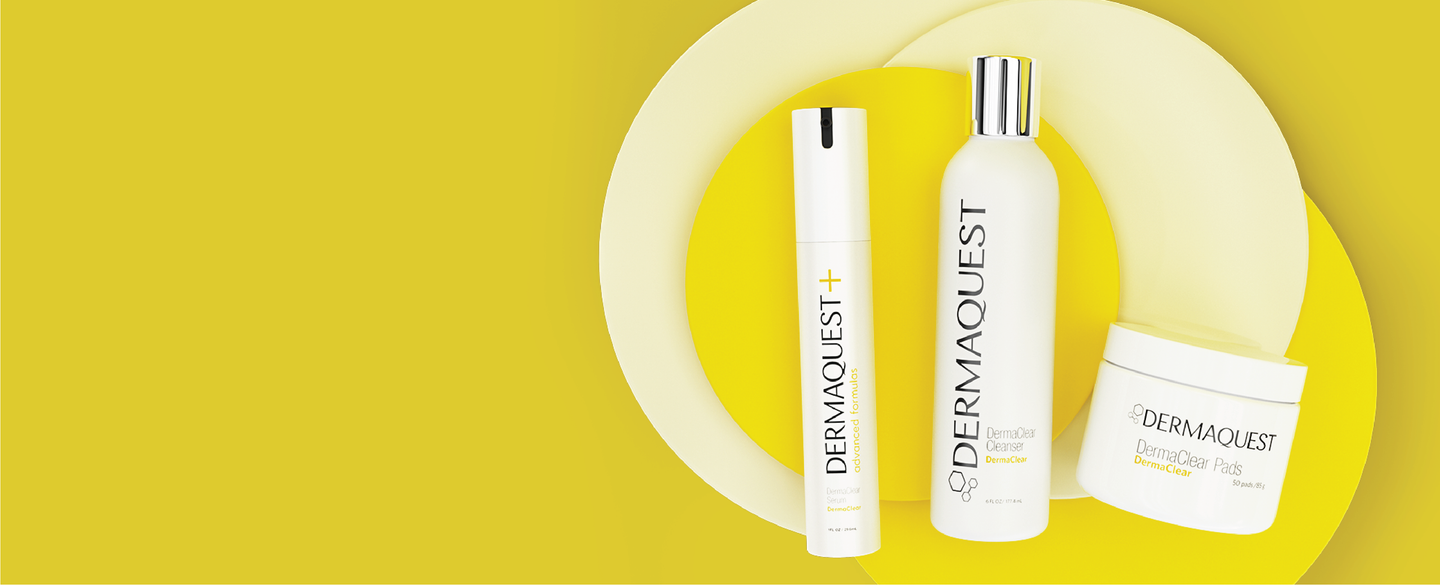 Dermaquest Infusion C Series
DermaQuest DermaClear Cleanser is a cleansing product designed for closed comedones and acne-prone skin, with Mandelic Acid as its core ingredient. This is a slow-penetrating, gentle AHA that effectively softens and gently exfoliates without irritating the skin. Combined with the antibacterial properties of tea tree oil, it inhibits the worsening of closed comedones, reduces the chance of them turning into acne, and keeps pores clear, while also preventing the skin from becoming overly cleansed and dry or sensitive.
Especially suitable for:
- People with oily T-zones, many closed comedones, and prone to breakouts
-
Maintains skin barrier: fresh and non-tight after washing
Instructions:
Use morning and night. Dispense an appropriate amount, add water to create a lather, massage gently, then rinse thoroughly.
(If skin is currently sensitive, it is recommended to discontinue use temporarily.)
2. Ingredient Conflicts and Over-Layering: A Key Reason for Recurring Closed Comedones

Using too many skincare products can cause ingredients to interact negatively, overburdening the skin and leading to more problems.
(Image source: Freepik)
Some women believe that more skincare products are better, so they use multiple products with different functions at once. However, doing so can over-stimulate the skin, increasing its burden. When used together, they interact negatively, leading to the following problems:
Ingredient Conflicts
- Acids + Vitamin C: Increased irritation
- Multiple whitening serums used simultaneously: Stratum corneum under pressure
- Anti-aging + rich cream: Suffocates oil
- High-oil ingredients: Clog pore openings
These conflicts usually don't show up immediately, but appear as closed comedones, small bumps, or tiny raised spots after 1–2 weeks.
Too Many Layers
Skincare products have different molecular sizes and absorption rates. When layered excessively, the pore openings become obstructed due to product buildup, trapping oil, which naturally leads to closed comedones.
Sometimes, what the skin needs is not more potent skincare, but rather a daily routine of gentle cleansing and exfoliation to allow keratin to renew at a more natural pace.

Dermalogica Daily Microfoliant is a "gentle exfoliation" product loved by many skin therapists. With a combination of rice starch enzymes + papaya enzymes + salicylic acid, it can break down dead skin cells and soften oil plugs clogging pores without damaging the skin barrier. Because it is extremely gentle, it is suitable for daily use and is an excellent way to prevent closed comedones from recurring.
Product highlights:
- For those with thick cuticles and small closed comedones on the forehead and chin
- Gently removes old keratin
- Softens oil plugs
- Deeply cleanses pores
Instructions:
After wetting your hands, pour about 1/2 teaspoon, add water to lather, and gently massage onto the face and neck for 1 minute before rinsing.
(If you are currently undergoing medical-grade strong acid/exfoliation treatments, it is recommended to avoid using it on the same day.)
3. Why do closed comedones turn into acne? Clogging plus bacteria is the start of inflammation.

Closed comedones are the "precursor" to acne. Pore blockage combined with bacterial proliferation and subsequent inflammation leads to acne. (Image source: Freepik)
Closed comedones form when oil and dead skin cells clog the pore opening. Since they are not exposed to air, they don't turn into blackheads, so they don't hurt when pressed, but they also can't exit. As long as the opening remains sealed and oil continuously accumulates, bacteria will begin to proliferate. When clogging and bacteria are simultaneously present, closed comedones will transform into red, swollen acne.
When you start to see slight redness and tenderness around the closed comedone, it means the skin is beginning to inflame. It's necessary to introduce an antibacterial, oil-controlling, and soothing serum to prevent the closed comedone from worsening into acne.

MEDYC Pure Serum This serum features tea tree oil as its core ingredient, effectively inhibiting acne-causing bacteria while improving excessive oil secretion in the T-zone. Chamomile provides soothing benefits, reducing redness and irritation; wild kudzu root extract helps regulate pore conditions, preventing the accumulation of closed comedones. It's ideal for those with both closed comedones and mild acne, or whose skin is constantly "unstable."
Product highlights:
- For people with closed comedones + mild acne
- Regulates oil and improves pores
-
Antibacterial and anti-inflammatory, soothes redness and swelling
Instructions:
Use morning and night. Apply 2–3 drops concentrated on the T-zone, blackheads, or clogged areas, avoiding the eye area; follow with moisturizer or cream after complete absorption.
5. Improving acne-prone skin is about "subtraction," not addition.
If your skin is getting worse with your current routine, start with the following principles:
- Reduce product layering
- Avoid conflicts between acids and whitening ingredients
- Use gentle cleansers
- Perform appropriate exfoliation
- Balance oil with lightweight moisturizers
- Keep the routine to 3–4 steps
Most people will start to see improvement within a few weeks. Skincare doesn't need to be complicated; skin is most likely to recover its health when the routine is simple and consistent.